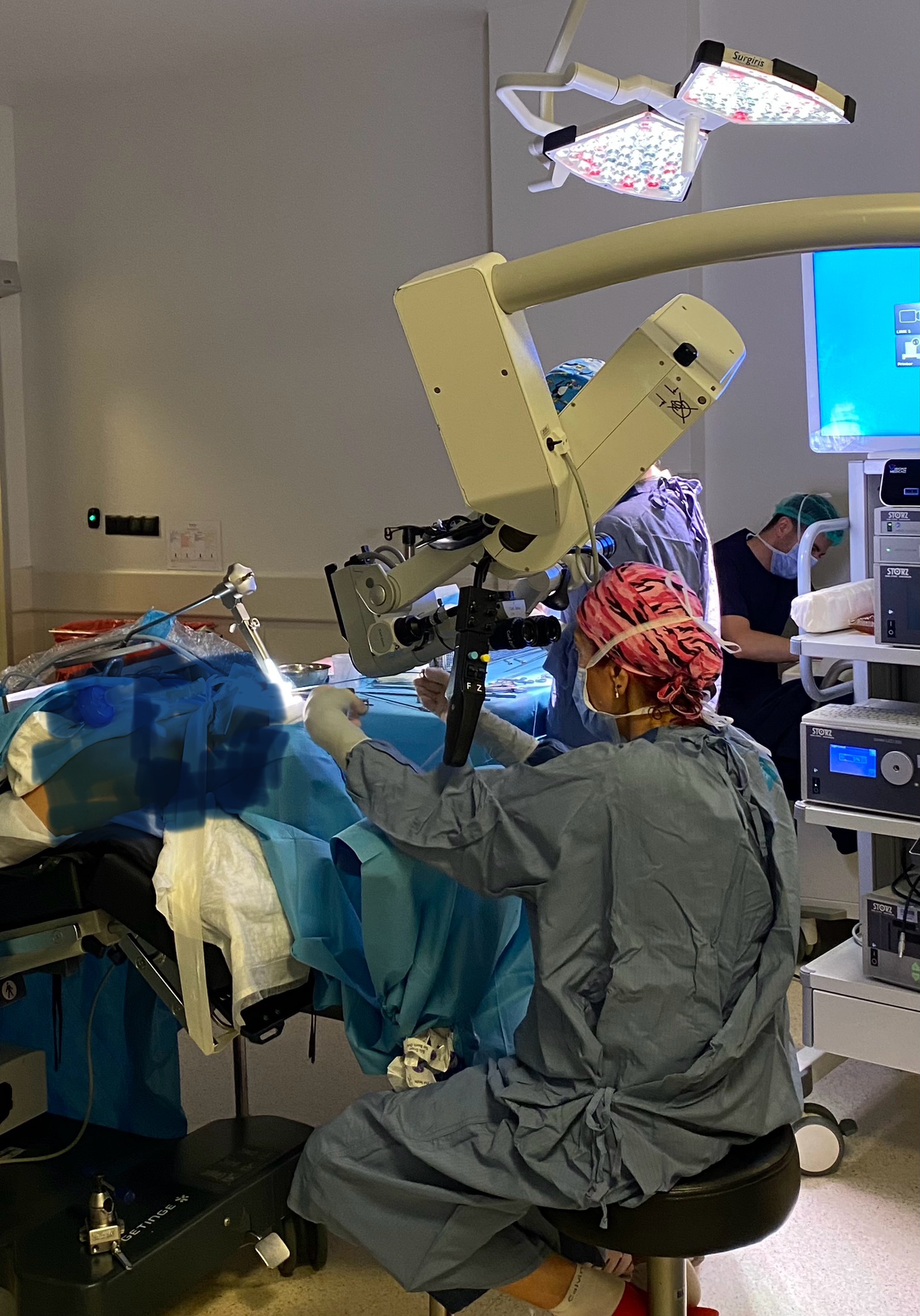
 Vocal fold microsurgery is a delicate surgical procedure performed to treat certain conditions of the vocal folds that cause hoarseness or deterioration in voice quality. This surgery is performed through the mouth; no incision is made on the neck.
During the operation, a special surgical microscope and very fine surgical instruments are used. The aim is to correct the problem while preserving the natural structure of the vocal folds as much as possible.
In which conditions is vocal fold microsurgery performed?
Vocal fold microsurgery may be performed in the treatment of vocal fold nodules, polyps, cysts, Reinke’s edema, and some benign lesions located on the vocal folds. In addition, in patients with vocal fold sulcus (vocal fold groove) or vocal fold scar (scar tissue), this surgical method may be used in selected and appropriate cases. Vocal fold microsurgery may also be considered in cases of long-standing hoarseness that does not improve despite medical treatment or voice therapy. The decision for surgery is made by your doctor after examination and the necessary tests.
How is vocal fold microsurgery performed?
Vocal fold microsurgery is performed under general anesthesia; in other words, you will be asleep during the procedure. Since the surgery is performed through the mouth, there is no incision on the neck or any externally visible scar. The duration of the surgery is usually between 30–60 minutes and may vary depending on the type of procedure performed. Most patients are discharged on the same day or the following day.
Recovery period after vocal fold microsurgery
The postoperative recovery period is at least as important as the surgery itself.
Voice rest
After surgery, voice rest for the period recommended by your doctor is of great importance for proper healing of the vocal folds. During this time, the goal is to rest the vocal folds as much as possible. For the recommended period, you will be asked not to speak at all and even to avoid whispering. Voice rest is a crucial step that directly affects the success of the surgery and the improvement in voice quality.
When you start using your voice again, your voice may sound hoarse or different during the first few days; this is usually temporary. Some patients may experience mild throat pain or a foreign body sensation, and these complaints generally decrease within a short time.
Healing process
After vocal fold microsurgery, improvement in voice quality is noticed within a few weeks in most patients. However, the healing process varies from person to person, and in some cases, complete recovery may take longer. During this period, it is important to be patient and to avoid straining the vocal folds. Postoperative voice therapy is often recommended. This therapy supports healing by helping patients learn how to use their vocal folds correctly and healthily. Especially in professional voice users such as teachers, religious officials, singers, and actors, singing voice therapy may also be required in the later stages of recovery. The main goal here is to increase the individual’s vocal endurance and prepare them for intense “occupational voice load.”
Are there risks associated with vocal fold microsurgery?
As with any surgical procedure, vocal fold microsurgery has some risks; however, these risks are generally low. Rarely, the expected improvement in voice quality may not be achieved, temporary or very rarely permanent voice changes may occur, or the lesion may recur. Your doctor will provide detailed information about these risks and your individual situation before the surgery.
What should I pay attention to after vocal fold microsurgery?
Avoiding smoking and alcohol use during the postoperative period is very important for the healing process. Throat clearing habits should be avoided, and the voice should not be strained. Drinking an adequate amount of water throughout the day contributes to vocal fold health. Medications prescribed by your doctor should be taken regularly, and follow-up appointments should not be missed.
Vocal fold microsurgery is an effective treatment method that significantly improves voice quality in appropriately selected patients. The success of the surgery depends not only on proper surgical technique but also on adherence to postoperative recommendations.
Do not hesitate to ask your doctor any questions you may have.
Remember, we work together for a healthy and strong voice.